


 Cart
Cart
 sales@molnova.com



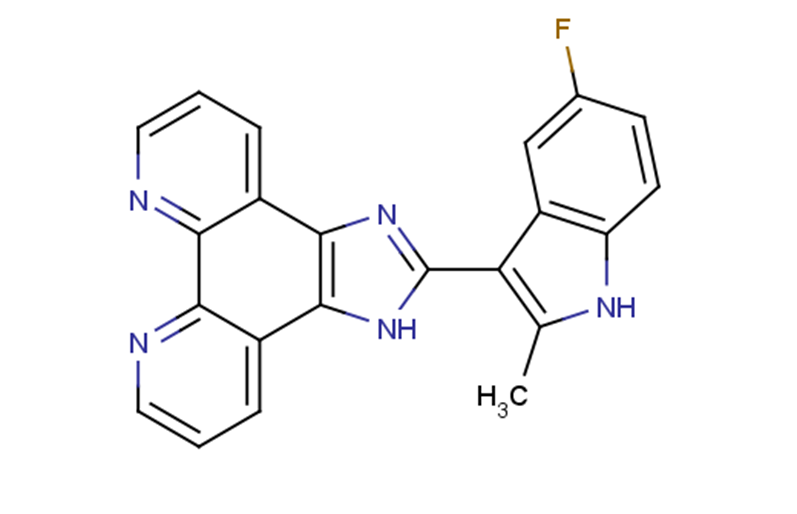
APTO-253
CAS No. 916151-99-0
APTO-253( LOR-253,LT-253 )
Catalog No. M22678 CAS No. 916151-99-0
APTO-253 inhibits c-Myc expression, stabilizes G-quadruplex DNA, and induces cell cycle arrest and apoptosis in acute myeloid leukemia cells. APTO-253 mediates anticancer activity through the induction of the KLF4 tumor suppressor.APTO-253 (5 μM) induces KLF4 expression and enhances apoptosis induced by NSC 119875 in both SKOV3 and OVCAR3 cells.
Purity : >98% (HPLC)
 COA
Datasheet
HNMR
HPLC
MSDS
Handing Instructions
COA
Datasheet
HNMR
HPLC
MSDS
Handing Instructions
| Size | Price / USD | Stock | Quantity |
| 2MG | 45 | In Stock |


|
| 5MG | 66 | In Stock |
|
| 10MG | 93 | In Stock |
|
| 25MG | 170 | In Stock |
|
| 50MG | 303 | In Stock |
|
| 100MG | 462 | In Stock |
|
| 200MG | Get Quote | In Stock |
|
| 500MG | Get Quote | In Stock |
|
| 1G | Get Quote | In Stock |
|
Biological Information
-
Product NameAPTO-253
-
NoteResearch use only, not for human use.
-
Brief DescriptionAPTO-253 inhibits c-Myc expression, stabilizes G-quadruplex DNA, and induces cell cycle arrest and apoptosis in acute myeloid leukemia cells. APTO-253 mediates anticancer activity through the induction of the KLF4 tumor suppressor.APTO-253 (5 μM) induces KLF4 expression and enhances apoptosis induced by NSC 119875 in both SKOV3 and OVCAR3 cells.
-
DescriptionAPTO-253 inhibits c-Myc expression, stabilizes G-quadruplex DNA, and induces cell cycle arrest and apoptosis in acute myeloid leukemia cells. APTO-253 mediates anticancer activity through the induction of the KLF4 tumor suppressor.APTO-253 (5 μM) induces KLF4 expression and enhances apoptosis induced by NSC 119875 in both SKOV3 and OVCAR3 cells. APTO-253 (5 μM) also leads to G1 phase arrest and reduces S and G2/M phase cells in SKOV3 and OVCAR3 cells. APTO-253 is cytotoxic to Raji and Raji/253R cell lines (IC50s: 105 nM and 1387 nM). APTO-253 (0.5 μM) also causes DNA damage in Raji cells. BRCA1/2 deficient cells are hypersensitive to APTO-253. ABCG2 overexpressed HEK-293 cells are resistant to APTO-253 and inhibition of ABCG2 reverses resistance to APTO-253 in Raji/253R [2]. APTO-253 suppresses the proliferation of acute myeloid leukemia (AML) cell lines and various forms of lymphoma cell lines (IC50s: 57 nM to 1.75 μM). APTO-253 (500 nM) also causes G0/G1 cell cycle arrest, induces apoptosis, and down-regulates MYC RNA and protein expression in AML lines. APTO-253 (500 nM) leads to DNA damage response pathways in MV4-11 cells. Furthermore, APTO-253 is a potent stabilizer of G-quadruplex (G4) motifs and demonstrates the greatest propensity for stabilizing the MYC G4 sequences.(In Vitro):APTO-253 (LOR-253) is an inducer of KLF4. APTO-253 (5 μM) induces KLF4 expression, and enhances apoptosis induced by NSC 119875 in both SKOV3 and OVCAR3 cells. APTO-253 (5 μM) also leads to G1 phase arrest and reduces S and G2/M phase cells in SKOV3 and OVCAR3 cells.APTO-253 is cytotoxic to Raji and Raji/253R cell lines, with IC50s of 105 ± 2.4 nM and 1387 ± 94 nM, respectively. APTO-253 (0.5 μM) also causes DNA damage in Raji cells. BRCA1/2 deficient cells are hypersensitive to APTO-253. ABCG2 overexpressed HEK-293 cells are resistant to APTO-253 and inhibition of ABCG2 reverses resistance to APTO-253 in Raji/253R.APTO-253 suppresses the proliferation of acute myeloid leukemia (AML) cell lines and various forms of lymphoma cell lines with IC50s ranging from 57 nM to 1.75 μM. APTO-253 (500 nM) also causes G0/G1 cell cycle arrest, induces apoptosis, and down regulates MYC RNA and protein expression in AML lines. APTO-253 (500 nM) leads to DNA damage response pathways in MV4-11 cells. Futhermore, APTO-253 is a potent stabilizer of Gquadruplex (G4) motifs, and demonstrates the greatest propensity for stabilizing the MYC G4 sequences.(In Vivo):APTO-253 (LOR-253; 15 mg/kg; IV; twice per day for 2 consecutive days per week for 14 days) has antiarthritic activity in a CIA model.
-
In VitroAPTO-253 (LOR-253) is an inducer of KLF4. APTO-253 (5 μM) induces KLF4 expression, and enhances apoptosis induced by NSC 119875 in both SKOV3 and OVCAR3 cells. APTO-253 (5 μM) also leads to G1 phase arrest and reduces S and G2/M phase cells in SKOV3 and OVCAR3 cells. APTO-253 is cytotoxic to Raji and Raji/253R cell lines, with IC50s of 105 ± 2.4 nM and 1387 ± 94 nM, respectively. APTO-253 (0.5 μM) also causes DNA damage in Raji cells. BRCA1/2 deficient cells are hypersensitive to APTO-253. ABCG2 overexpressed HEK-293 cells are resistant to APTO-253 and inhibition of ABCG2 reverses resistance to APTO-253 in Raji/253R. APTO-253 suppresses the proliferation of acute myeloid leukemia (AML) cell lines and various forms of lymphoma cell lines with IC50s ranging from 57 nM to 1.75 μM. APTO-253 (500 nM) also causes G0/G1 cell cycle arrest, induces apoptosis, and down regulates MYC RNA and protein expression in AML lines. APTO-253 (500 nM) leads to DNA damage response pathways in MV4-11 cells. Futhermore, APTO-253 is a potent stabilizer of Gquadruplex (G4) motifs, and demonstrates the greatest propensity for stabilizing the MYC G4 sequences.
-
In VivoAPTO-253 (LOR-253; 15 mg/kg; IV; twice per day for 2 consecutive days per week for 14 days) has antiarthritic activity in a CIA model. Animal Model:DBA/1J male mice (6 weeks) with collagen induced arthritis (CIA) Dosage:15 mg/kg Administration:IV; twice per day for 2 consecutive days per week for 14 days Result:Demonstrated significant preventive and therapeutic activity on arthritis formation.
-
SynonymsLOR-253,LT-253
-
PathwayCell Cycle/DNA Damage
-
Targetc-Myc
-
Recptorc-Myc
-
Research AreaCancer
-
IndicationAdvanced or Metastatic Solid Tumours
Chemical Information
-
CAS Number916151-99-0
-
Formula Weight367.38
-
Molecular FormulaC22H14FN5
-
Purity>98% (HPLC)
-
SolubilityDMSO:32.33 mg/mL(88 mM)
-
SMILESCc1[nH]c2ccc(F)cc2c1-c1nc2c([nH]1)c1cccnc1c1ncccc21
-
Chemical Name——
Shipping & Storage Information
-
Storage(-20℃)
-
ShippingWith Ice Pack
-
Stability≥ 2 years
Reference
1. Local A, et al. APTO-253 Stabilizes G-quadruplex DNA, Inhibits MYC Expression, and Induces DNA Damage in Acute Myeloid Leukemia Cells. Mol Cancer Ther. 2018 Jun;17(6):1177-1186.
molnova catalog



related products
-
MYCi975
MYCi975 is an orally active inhibitor of MYC.MYCi975 inhibits P493-6, MV411,SK-N-B2 cells viability in an MYC-dependent manner(IC50s of 3.7, 3.9, 6.4 μM, respectively).The initial lead, MYC inhibitor 361 (MYCi361), suppressed in vivo tumor growth in mice, increased tumor immune cell infiltration, upregulated PD-L1 on tumors, and sensitized tumors to anti-PD1 immunotherapy. However, 361 demonstrated a narrow therapeutic index.
-
MYC inhibitor DC-34
MYC inhibitor DC-34 is a potent small molecule that selectively inhibits MYC at the transcriptional level only when a G-quadruplex (G4) is present in the promoter.
-
10058-F4
10058-F4 is a specific c-Myc inhibitor that disrupts the association between the c-Myc and Max.
