


 Cart
Cart
 sales@molnova.com



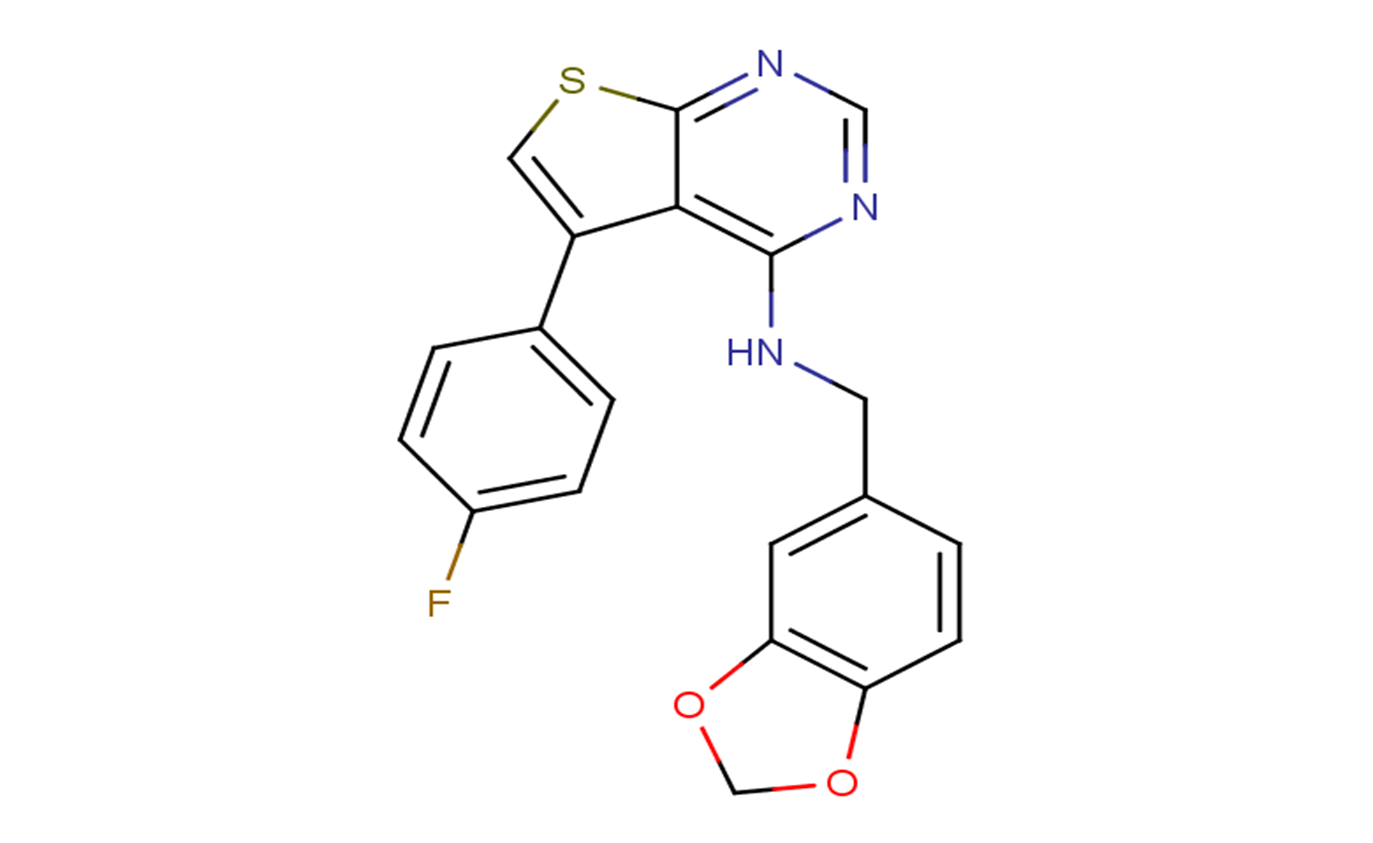
AEM1
CAS No. 1030123-90-0
AEM1( —— )
Catalog No. M23234 CAS No. 1030123-90-0
AEM1 is an inhibitor of deregulated NRF2 transcriptional activity in cancer.
Purity : >98% (HPLC)
 COA
Datasheet
HNMR
HPLC
MSDS
Handing Instructions
COA
Datasheet
HNMR
HPLC
MSDS
Handing Instructions
| Size | Price / USD | Stock | Quantity |
| 5MG | 42 | In Stock |


|
| 10MG | 76 | In Stock |
|
| 25MG | 160 | In Stock |
|
| 50MG | 282 | In Stock |
|
| 100MG | 483 | In Stock |
|
| 200MG | Get Quote | In Stock |
|
| 500MG | Get Quote | In Stock |
|
| 1G | Get Quote | In Stock |
|
Biological Information
-
Product NameAEM1
-
NoteResearch use only, not for human use.
-
Brief DescriptionAEM1 is an inhibitor of deregulated NRF2 transcriptional activity in cancer.
-
DescriptionAEM1 is an inhibitor of deregulated NRF2 transcriptional activity in cancer. AEM1 acts by broadly decreasing the expression of NRF2 controlled genes, sensitizing A549 cells to various chemotherapeutic agents, and inhibiting the growth of A549 cells in vitro and in vivo.
-
In Vitro——
-
In Vivo——
-
Synonyms——
-
PathwayNuclear Receptor/Transcription Factor
-
TargetKeap1-Nrf2
-
RecptorNRF2
-
Research Area——
-
Indication——
Chemical Information
-
CAS Number1030123-90-0
-
Formula Weight379.4
-
Molecular FormulaC20H14FN3O2S
-
Purity>98% (HPLC)
-
SolubilityDMSO:10 mM
-
SMILESC1OC2=C(O1)C=C(C=C2)CNC3=C4C(=CSC4=NC=N3)C5=CC=C(C=C5)F
-
Chemical Name——
Shipping & Storage Information
-
Storage(-20℃)
-
ShippingWith Ice Pack
-
Stability≥ 2 years
Reference
molnova catalog



related products
-
Sulforaphane
Sulforaphane (SFN) is an antioxidant agent that exerts protective effects against cell damage by activating Nrf2.
-
K67
K67 competitively inhibits the interaction between Nrf2-ETGE and Keap1, inhibits the proliferation of HCC cells with high expression of S351 phosphorylated p62, and can be used to study cancer.
-
L-Cystine dihydrochl...
L-Cystine dihydrochloride is an Nrf2 inducer with whitening and anti-dark spot effects.L-Cystine dihydrochloride has cytoprotective effects in cells, and is often added to various fungal cultures as a carbon source.
