


 Cart
Cart
 sales@molnova.com



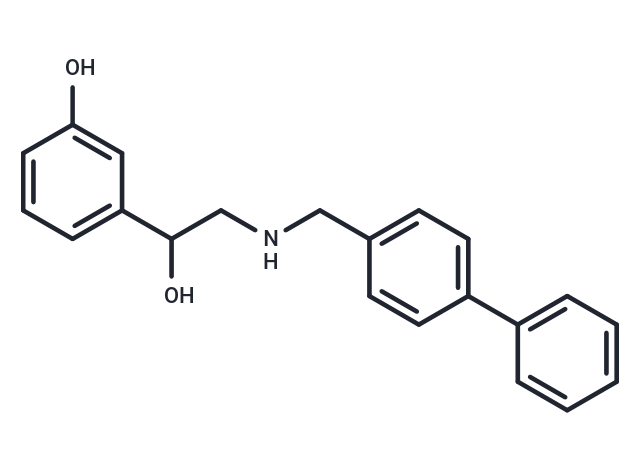
AC-73
CAS No. 775294-71-8
AC-73( —— )
Catalog No. M33256 CAS No. 775294-71-8
AC-73 is an orally available Cluster of Differentiation 147 (CD147) inhibitor with high bioavailability that selectively disrupts the dimerization of CD147 .
Purity : >98% (HPLC)
 COA
Datasheet
HNMR
HPLC
MSDS
Handing Instructions
COA
Datasheet
HNMR
HPLC
MSDS
Handing Instructions
| Size | Price / USD | Stock | Quantity |
| 2MG | 68 | Get Quote |


|
| 5MG | 93 | Get Quote |
|
| 10MG | 174 | Get Quote |
|
| 25MG | 296 | Get Quote |
|
| 50MG | 497 | Get Quote |
|
| 100MG | 861 | Get Quote |
|
| 500MG | 1728 | Get Quote |
|
| 1G | Get Quote | Get Quote |
|
Biological Information
-
Product NameAC-73
-
NoteResearch use only, not for human use.
-
Brief DescriptionAC-73 is an orally available Cluster of Differentiation 147 (CD147) inhibitor with high bioavailability that selectively disrupts the dimerization of CD147 .
-
DescriptionAC-73 is a first specific, orally active inhibitor of cluster of differentiation 147 (CD147), which specifically disrupts CD147 dimerization, thereby mainly suppressing the CD147/ERK1/2/STAT3/MMP-2 pathways. AC-73 inhibits the motility and invasion of hepatocellular carcinoma cells. AC-73 is also an anti-proliferative agent and an inducer of autophagy in leukemic cells.
-
In VitroAC-73 (5-10 μM; 24 hours; SMMC-7721 and Huh-7 cells) treatment significantly decreases the migration ability of SMMC-7721 and Huh-7 cells in a dose-dependent manner and decreases the invasion of two HCC cells in a dose-dependent manner at 24 hours. AC-73 treatment reduces HCC metastases. There are no obvious effects on cell viability when two HCC cells are treated with AC-73 at a maximum concentration of 20 μM. The possible binding sites of AC-73 on CD147 included Glu64 and Glu73 in the N-terminal IgC2 domain, which two residues are located in the dimer interface of CD147. AC-73 (5-10 μM; 24 hours; SMMC-7721 cells) treatment could significantly inhibit both MMP-2 and MMP-9 mRNA expression at the concentration of 10 μM, especially MMP-2, but no obvious effect on MMP-1, MMP-3, MMP-7, MMP-11 nor MMP-13. AC-73 could dose dependently reduce the expression of MMP-2 mRNA level and secretion of the protein level using RT-qPCR analysis and gelatin zymography experiments.AC-73 (5-20 μM; 6 hours; SMMC-7721 cells) treatment dose-dependently suppresses the phosphorylation of ERK1/2 and STAT3.RT-PCR Cell Line:SMMC-7721 cells Concentration:5 μM or 10 μM Incubation Time:24 hours Result:Significantly inhibited both MMP-2 and MMP-9 mRNA expression at the concentration of 10 μM. Dose dependently reduced the expression of MMP-2 mRNA level and secretion of the protein level using RT-qPCR analysis and gelatin zymography experiments.Western Blot Analysis Cell Line:SMMC-7721 cells Concentration:5 μM, 10 μM or 20 μM Incubation Time:6 hours Result:The phosphorylation of ERK1/2 and STAT3 was dose-dependently suppressed.
-
In VivoAC-73 (25-50 mg/kg; for 4 weeks; Male BALB/c nu/nu mice) treatment significantly decreases the incidence of metastatic foci in nude mice. AC-73 inhibits the phosphorylation of ERK1/2 and STAT3 in a dose-dependent manner. MMP-2 is also reduced by AC-73. AC-73 could not inhibit tumor cell proliferation in vivo.Animal Model:Male BALB/c nu/nu mice (4-6 weeks) with SMMC-7721 cellsDosage:25 mg/kg, 50 mg/kg Administration: Injected; daily; for 3 weeks Result:Significantly decreased the incidence of metastatic foci in nude mice. Inhibited the phosphorylation of ERK1/2 and STAT3 in a dose-dependent manner. MMP-2 was also reduced.
-
Synonyms——
-
PathwayAutophagy
-
TargetAutophagy
-
RecptorAutophagy
-
Research Area——
-
Indication——
Chemical Information
-
CAS Number775294-71-8
-
Formula Weight319.4
-
Molecular FormulaC21H21NO2
-
Purity>98% (HPLC)
-
SolubilityIn Vitro:?DMSO : ≥ 250 mg/mL (782.72 mM )
-
SMILESOC(CNCc1ccc(cc1)-c1ccccc1)c1cccc(O)c1
-
Chemical Name——
Shipping & Storage Information
-
Storage(-20℃)
-
ShippingWith Ice Pack
-
Stability≥ 2 years
Reference
1. Fu ZG, et al. A novel small-molecule compound targeting CD147 inhibits the motility and invasion of hepatocellular carcinoma cells. Oncotarget. 2016 Feb 23;7(8):9429-47.?
molnova catalog



related products
-
UVI 3003
UVI 3003 is a highly selective antagonist of the retinoid X receptor. UVI 3003 inhibits Xenopus and human RXRα in Cos7 cells (IC50s: 0.22 and 0.24 μM, respectively).
-
MitoSOX Red
MitoSOX Red is a novel fluorescent probe that is specific and cell membrane-permeable and targets mitochondria in living cells.MitoSOX Red is oxidized by superoxide upon entry into the mitochondria and is not oxidized by other ROS or RNS-generating systems.
-
Euxanthone
Euxanthone (1,7-Dihydroxyxanthone), an xanthone derivative extracted from the roots of Polygala tenuifolia Willd, has antitumour, neuroprotective and vasorelaxant activities, and attenuates Aβ1-42-induced oxidative stress and apoptosis by inducing autophagy.
