


 Cart
Cart
 sales@molnova.com



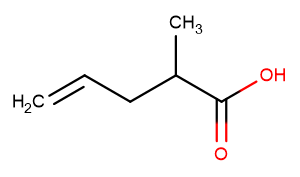
2-Methyl-4-pentenoic Acid
CAS No. 1575-74-2
2-Methyl-4-pentenoic Acid( 2-Methylpent-4-enoic acid )
Catalog No. M21378 CAS No. 1575-74-2
2-Methyl-4-pentenoic acid is a branched-chain fatty acid.
Purity : >98% (HPLC)
 COA
Datasheet
HNMR
HPLC
MSDS
Handing Instructions
COA
Datasheet
HNMR
HPLC
MSDS
Handing Instructions
| Size | Price / USD | Stock | Quantity |
| 1 mL x 10 mM in DMSO | 29 | In Stock |


|
| 100MG | Get Quote | In Stock |
|
| 200MG | Get Quote | In Stock |
|
| 500MG | 28 | In Stock |
|
| 1G | 36 | In Stock |
|
Biological Information
-
Product Name2-Methyl-4-pentenoic Acid
-
NoteResearch use only, not for human use.
-
Brief Description2-Methyl-4-pentenoic acid is a branched-chain fatty acid.
-
Description2-Methyl-4-pentenoic acid is a branched-chain fatty acid.
-
In Vitro——
-
In Vivo——
-
Synonyms2-Methylpent-4-enoic acid
-
PathwayOthers
-
TargetOther Targets
-
RecptorOthers
-
Research Area——
-
Indication——
Chemical Information
-
CAS Number1575-74-2
-
Formula Weight114.14
-
Molecular FormulaC6H10O2
-
Purity>98% (HPLC)
-
SolubilityIn Vitro:?DMSO : 100 mg/mL (876.12 mM)
-
SMILESCC(CC=C)C(O)=O
-
Chemical Name——
Shipping & Storage Information
-
Storage(-20℃)
-
ShippingWith Ice Pack
-
Stability≥ 2 years
Reference
molnova catalog



related products
-
Calcitonin Gene Rela...
Calcitonin Gene Related Peptide, rat
-
Lophanthoidin F
Lophanthoidin F is a kind of natural product derived from the herbs of Rabdosia lophanthoides.
-
Procyanidin B2 3,3-d...
Procyanidin B2 3,3-di-O-gallate
