


 Cart
Cart
 sales@molnova.com



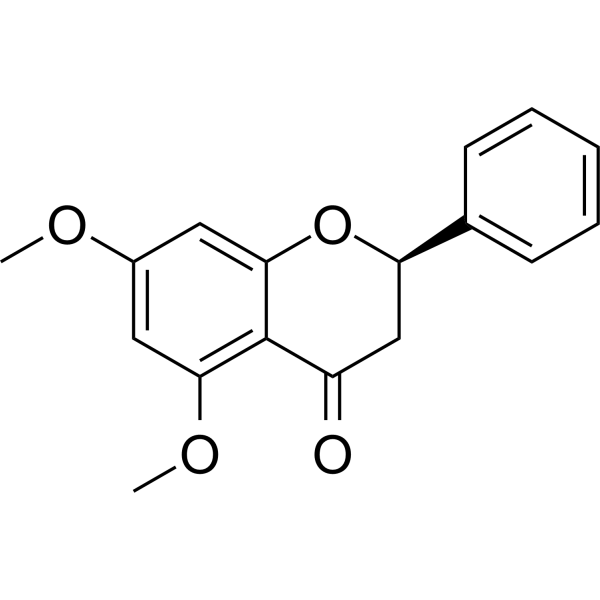
(2R)-5,7-Dimethoxyflavanone
CAS No. 1277188-85-8
(2R)-5,7-Dimethoxyflavanone( —— )
Catalog No. M31603 CAS No. 1277188-85-8
5,7-Dimethoxyflavanone has anti-inflammatory activity.
Purity : >98% (HPLC)
 COA
Datasheet
HNMR
HPLC
MSDS
Handing Instructions
COA
Datasheet
HNMR
HPLC
MSDS
Handing Instructions
| Size | Price / USD | Stock | Quantity |
| 5MG | 565 | In Stock |


|
| 10MG | 801 | In Stock |
|
| 50MG | Get Quote | In Stock |
|
| 100MG | Get Quote | In Stock |
|
Biological Information
-
Product Name(2R)-5,7-Dimethoxyflavanone
-
NoteResearch use only, not for human use.
-
Brief Description5,7-Dimethoxyflavanone has anti-inflammatory activity.
-
Description5,7-Dimethoxyflavanone has anti-inflammatory activity.
-
In Vitro——
-
In Vivo——
-
Synonyms——
-
PathwayOthers
-
TargetOther Targets
-
Recptor——
-
Research Area——
-
Indication——
Chemical Information
-
CAS Number1277188-85-8
-
Formula Weight284.31
-
Molecular FormulaC17H16O4
-
Purity>98% (HPLC)
-
Solubility——
-
SMILES——
-
Chemical Name——
Shipping & Storage Information
-
Storage(-20℃)
-
ShippingWith Ice Pack
-
Stability≥ 2 years
Reference



-
IKKγ NBD Inhibitory ...
A cell-permeable synthetic peptide NEMO-binding domain peptide (NBD peptide) corresponding to the NEMO amino-terminal alpha-helical region is shown to block TNF-alpha-induced NF-kB activation. The interaction of IKγNEMO with the IKK complex is vital for the activation of the IKK complex and the subsequent activation of NF-kB.
-
Methyl retinoate
Methyl retinoate (Retinoic acid, methyl ester) induces aseptic inflammation at the site of administration in in vivo experiments, which causes an increase in the number of leukocytes in the blood and a decrease in the levels of red blood cells and Hb.Methyl retinoate promotes spontaneous leukemia.Methyl retinoate can be Used in the treatment of gastric hypertrophy and ulcers due to vitamin A deficiency.
-
VA - β - MSH, Lipotr...
VA - β - MSH, Lipotropin - γ, Proopiomelanocortin – derived
