


 Cart
Cart
 sales@molnova.com



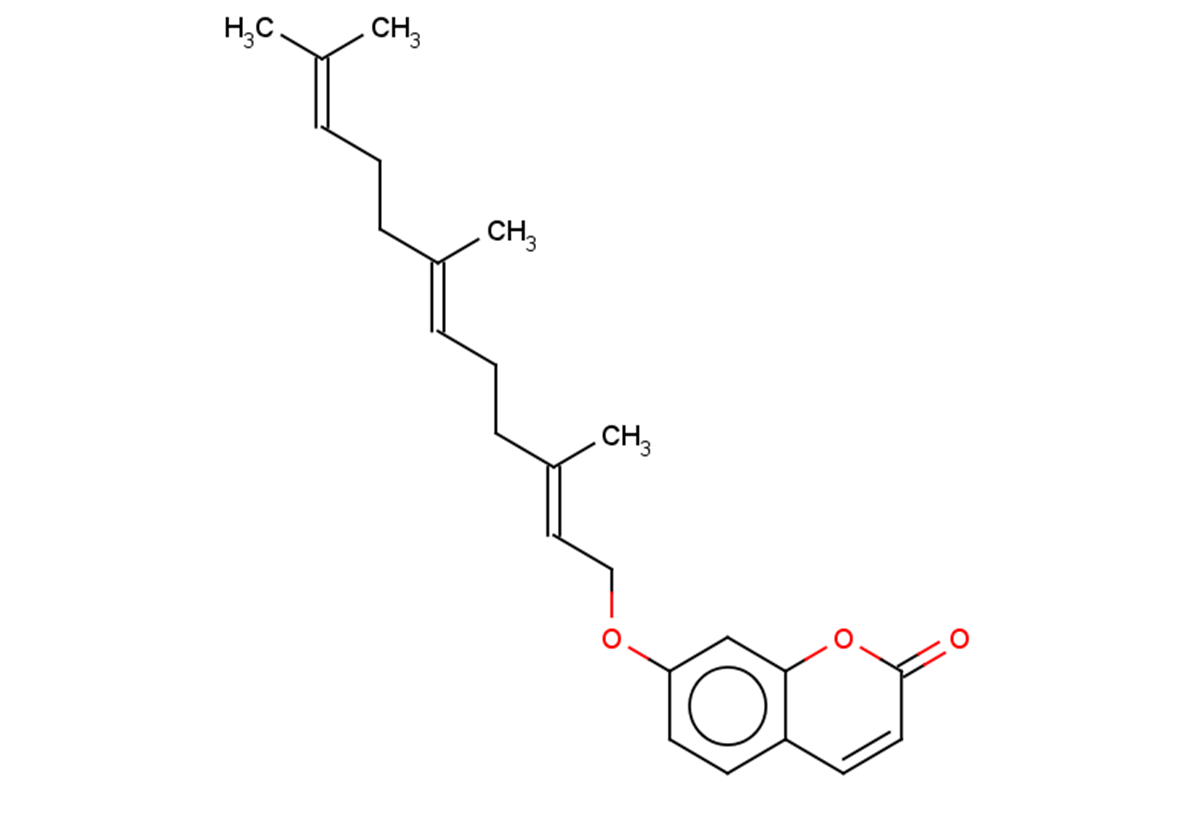
Umbelliprenin
CAS No. 23838-17-7
Umbelliprenin( —— )
Catalog No. M24098 CAS No. 23838-17-7
Umbelliprenin alleviated neuropathic pain, and decreased serum IL-6 levels and oxidative stress.
Purity : >98% (HPLC)
 COA
Datasheet
HNMR
HPLC
MSDS
Handing Instructions
COA
Datasheet
HNMR
HPLC
MSDS
Handing Instructions
| Size | Price / USD | Stock | Quantity |
| 5MG | 133 | In Stock |


|
| 10MG | 195 | In Stock |
|
| 25MG | 327 | In Stock |
|
| 50MG | 484 | In Stock |
|
| 100MG | 701 | In Stock |
|
| 200MG | Get Quote | In Stock |
|
| 500MG | Get Quote | In Stock |
|
| 1G | Get Quote | In Stock |
|
Biological Information
-
Product NameUmbelliprenin
-
NoteResearch use only, not for human use.
-
Brief DescriptionUmbelliprenin alleviated neuropathic pain, and decreased serum IL-6 levels and oxidative stress.
-
DescriptionUmbelliprenin alleviated neuropathic pain, and decreased serum IL-6 levels and oxidative stress.
-
In Vitro——
-
In Vivo——
-
Synonyms——
-
PathwayApoptosis
-
TargetIL Receptor
-
RecptorIL-6
-
Research Area——
-
Indication——
Chemical Information
-
CAS Number23838-17-7
-
Formula Weight366.49
-
Molecular FormulaC24H30O3
-
Purity>98% (HPLC)
-
SolubilityDMSO: 5 mg/ml (13.64 mM); DMF: 30 mg/ml (81.85 mM)
-
SMILESCC(C)=CCC/C(/C)=C/CC/C(/C)=C/COc(cc1)cc(O2)c1C=CC2=O
-
Chemical Name——
Shipping & Storage Information
-
Storage(-20℃)
-
ShippingWith Ice Pack
-
Stability≥ 2 years
Reference
1.Shahraki J, et al. Umbelliprenin relieves paclitaxel-induced neuropathy. J Pharm Pharmacol. 2020 Dec;72(12):1822-1829.
molnova catalog



related products
-
Guselkumab
Guselkumab (CNTO 1959) is a recombinant human IgG1 monoclonal antibody targeting the IL-23p19 subunit.
-
Kaempferitrin
Kaempferitrin has antidepressant-like effect related to the serotonergic system, principally 5-HT1A.
-
Desacetyl asperulosi...
Deacetylasperulosidic acid is a natural compound of Morinda citrifolia fruit. It has antioxidant activity by increasing superoxide dismutase activity. It also prevents 4-nitroquinoline 1-oxide (4NQO) induced DNA damage in vitro suppresses IL-2 production along with the activation of natural killer cells.
