


 Cart
Cart
 sales@molnova.com



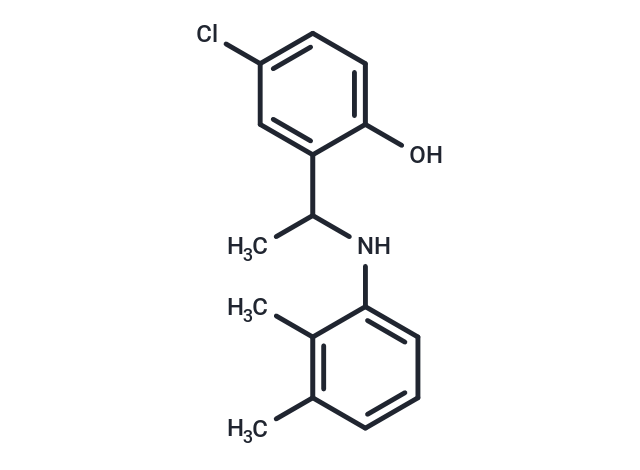
MFI8
CAS No. 694488-83-0
MFI8( —— )
Catalog No. M35428 CAS No. 694488-83-0
MFI8 is a compound that regulates mitochondrial fission and can be used to study aging.
Purity : >98% (HPLC)
 COA
Datasheet
HNMR
HPLC
MSDS
Handing Instructions
COA
Datasheet
HNMR
HPLC
MSDS
Handing Instructions
| Size | Price / USD | Stock | Quantity |
| 1 mL x 10 mM in DMSO | 150 | In Stock |


|
| 5MG | 162 | In Stock |
|
| 10MG | 267 | In Stock |
|
| 25MG | 439 | In Stock |
|
| 50MG | 586 | In Stock |
|
| 100MG | 764 | In Stock |
|
| 200MG | Get Quote | In Stock |
|
| 500MG | Get Quote | In Stock |
|
| 1G | Get Quote | In Stock |
|
Biological Information
-
Product NameMFI8
-
NoteResearch use only, not for human use.
-
Brief DescriptionMFI8 is a compound that regulates mitochondrial fission and can be used to study aging.
-
DescriptionMFI8 is a small molecule inhibitor of mitochondrial.
-
In Vitro——
-
In Vivo——
-
Synonyms——
-
PathwayOthers
-
TargetOther Targets
-
RecptorMitochondrial Metabolism
-
Research Area——
-
Indication——
Chemical Information
-
CAS Number694488-83-0
-
Formula Weight275.77
-
Molecular FormulaC16H18ClNO
-
Purity>98% (HPLC)
-
SolubilityIn Vitro:?DMSO : 100 mg/mL (362.62 mM; Ultrasonic )
-
SMILESCC(Nc1cccc(C)c1C)c1cc(Cl)ccc1O
-
Chemical Name——
Shipping & Storage Information
-
Storage(-20℃)
-
ShippingWith Ice Pack
-
Stability≥ 2 years
Reference
1. Zacharioudakis E, et al. Modulating mitofusins to control mitochondrial function and signaling. Nat Commun. 2022 Jul 7;13(1):3775.?
molnova catalog



related products
-
16-hydroxy Hexadecan...
16-hydroxy Hexadecanoic Acid (Juniperic acid) is a compound isolated from the leaves and stems of Arabidopsis thaliana and can be used to prevent, alleviate, or treat metabolic diseases.
-
Fluoroethyl
Flurothyl (Indoklon) is a volatile liquid drug from the halogenated ether family.
-
Adenosine-5'-diphosp...
Adenosine 5'-diphosphate sodium salt is an adenine nucleotide that is phosphorylated into ATP by ATPase. This phosphorylation is a key part of cellular homeostatis as it allows for energy storage and is involved in nucleic acid metabolism. ADP affects platelet activation through its interaction with ADP receptors P2Y1 P2Y12 and P2X1.
