


 Cart
Cart
 sales@molnova.com



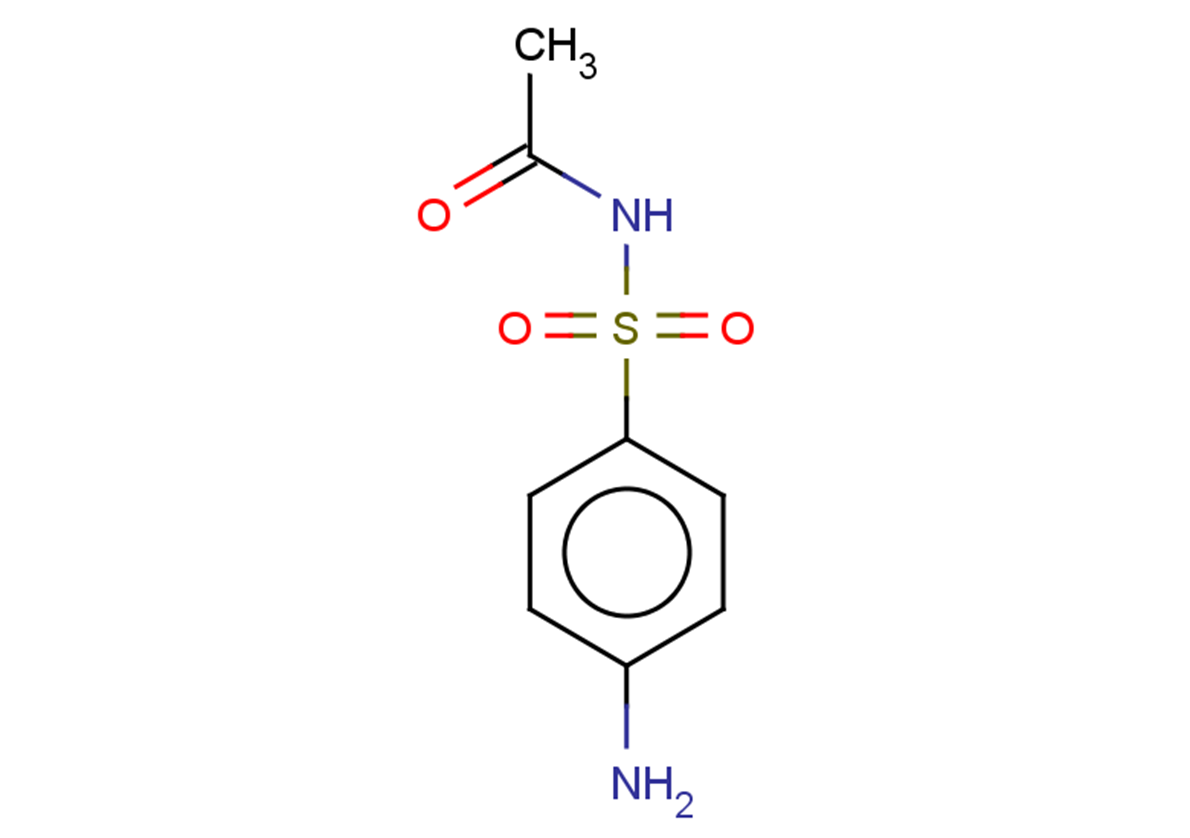
Sulfacetamide
CAS No. 144-80-9
Sulfacetamide( Sulphacetamide | Acetosulfamine )
Catalog No. M23613 CAS No. 144-80-9
Sulfacetamide is used to treat blepharitis or conjunctivitis (in eye-drop solution) by limiting the presence of folic acid which bacteria need to survive.
Purity : >98% (HPLC)
 COA
Datasheet
HNMR
HPLC
MSDS
Handing Instructions
COA
Datasheet
HNMR
HPLC
MSDS
Handing Instructions
| Size | Price / USD | Stock | Quantity |
| 100MG | Get Quote | In Stock |


|
| 200MG | Get Quote | In Stock |
|
| 500MG | Get Quote | In Stock |
|
| 1G | 33 | In Stock |
|
Biological Information
-
Product NameSulfacetamide
-
NoteResearch use only, not for human use.
-
Brief DescriptionSulfacetamide is used to treat blepharitis or conjunctivitis (in eye-drop solution) by limiting the presence of folic acid which bacteria need to survive.
-
DescriptionSulfacetamide is used to treat blepharitis or conjunctivitis (in eye-drop solution) by limiting the presence of folic acid which bacteria need to survive. sulfacetamide may serve as a treatment for mild forms of hidradenitis suppurativa. It is also used to control acne.
-
In Vitro——
-
In Vivo——
-
SynonymsSulphacetamide | Acetosulfamine
-
PathwayOthers
-
TargetOther Targets
-
RecptorOthers
-
Research Area——
-
Indication——
Chemical Information
-
CAS Number144-80-9
-
Formula Weight214.24
-
Molecular FormulaC8H10N2O3S
-
Purity>98% (HPLC)
-
SolubilityDMSO : 99 mg/mL (462.10 mM; Need ultrasonic); Water:Insoluble
-
SMILESCC(NS(c(cc1)ccc1N)(=O)=O)=O
-
Chemical Name——
Shipping & Storage Information
-
Storage(-20℃)
-
ShippingWith Ice Pack
-
Stability≥ 2 years
Reference
1.Bartlett KB, Davis SA, Feldman SR. Tolerability of topical antimicrobials in treatment of acne vulgaris. J Drugs Dermatol. 2014 Jun;13(6):658-62. Review. PubMed PMID: 24918554.
molnova catalog



related products
-
S-(5-Adenosyl)-L-met...
S-(5'-Adenosyl)-L-methionine chloride is a natural product. S-(5'-Adenosyl)-L-methionine chloride can be used as a reference standard.
-
Pilocarpine
Pilocarpine has been used to treat glaucoma, ocular hypertension and xerostomia. Pilocarpine can induce seizures.
-
CIL62
CIL62 is a cell death inducer of caspase-3/7-independent. The mechanism of action of CIL62 is Necrostatin-1 dependent cell death.
