


 Cart
Cart
 sales@molnova.com



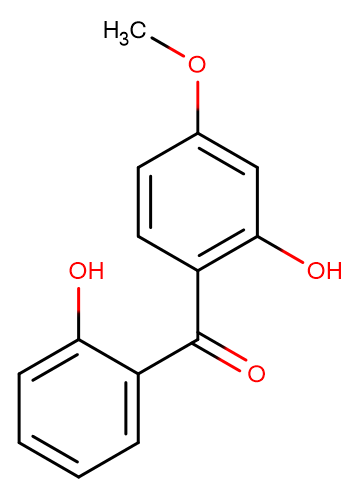
Dioxybenzone
CAS No. 131-53-3
Dioxybenzone( benzophenone-8 )
Catalog No. M11275 CAS No. 131-53-3
Dioxybenzone (benzophenone-8) is an organic compound used in sunscreen to block UVB and short-wave UVA (ultraviolet) rays.
Purity : >98% (HPLC)
 COA
Datasheet
HNMR
HPLC
MSDS
Handing Instructions
COA
Datasheet
HNMR
HPLC
MSDS
Handing Instructions
| Size | Price / USD | Stock | Quantity |
| 1 mL x 10 mM in DMSO | 44 | In Stock |


|
| 100MG | Get Quote | In Stock |
|
| 200MG | 28 | In Stock |
|
| 500MG | 39 | In Stock |
|
| 1G | 54 | In Stock |
|
Biological Information
-
Product NameDioxybenzone
-
NoteResearch use only, not for human use.
-
Brief DescriptionDioxybenzone (benzophenone-8) is an organic compound used in sunscreen to block UVB and short-wave UVA (ultraviolet) rays.
-
DescriptionDioxybenzone (benzophenone-8) is an organic compound used in sunscreen to block UVB and short-wave UVA (ultraviolet) rays. It is a derivative of benzophenone. It is a yellow powder with a melting point of 68 °C It is insoluble in water, but moderately soluble in ethanol and isopropanol.
-
In Vitro——
-
In Vivo——
-
Synonymsbenzophenone-8
-
PathwayOthers
-
TargetOther Targets
-
RecptorOthers
-
Research Area——
-
Indication——
Chemical Information
-
CAS Number131-53-3
-
Formula Weight244.25
-
Molecular FormulaC14H12O4
-
Purity>98% (HPLC)
-
SolubilityChloroform: 45mg/mL
-
SMILESCOC1=CC(O)=C(C=C1)C(=O)C1=CC=CC=C1O
-
Chemical Name——
Shipping & Storage Information
-
Storage(-20℃)
-
ShippingWith Ice Pack
-
Stability≥ 2 years
Reference
1.Rao GS, et al. anticancer Res. 2013 Jun;33(6):2535-40.
molnova catalog



related products
-
Galanin Message Asso...
Galanin Message Associated Peptide (16-41) amide
-
Vazegepant HCl
Vazegepant is the first intranasal gepant for the acute treatment of migraine and has announced a positive phase II/III study.
-
Quizalofop
Quizalofop is a reagent of biochemical.
